For more than a century, a common rite of passage for physicians in the United States has been to sit an examination for a medical license issued by one of this country’s state medical boards.
One of my recent tweets (@davearlingtontx) shared questions from a 1911 exam conducted by the Nevada Board of Medical Examiners. I suspect those physicians whose test experience derives from their encounters with today’s examinations (USMLE or COMLEX-USA) might feel smug looking at these items from the Nevada board. With a martyr’s pride they might reflect on their long days laboring over 300+ multiple-choice question tests and 12-station standardized patient encounters as part of their multi-step examination process…and maybe hear an Oliver Twist voice in their head saying, “Please, sir, may I have a 10 question test!”

That reaction would be understandable. After all, there is a human tendency in reflecting upon the past to view those periods preceding ours as somehow less sophisticated or lacking the complexity we perceive as uniquely characteristic of our own era. Of course, this mental filter blinds us to our own bias—one predisposing us to assume greater sophistication for ourselves simply because we enjoy the advantage of hindsight unavailable to those living in the immediate present of a century ago.
Getting back to those questions from the Nevada medical icensing exam, such a reaction is unfair for several other reasons. First, the questions shown here are merely an excerpt—just one small portion of the Nevada exam. These questions derived from just the section on Bacteriology and Hygiene.
Like virtually every state medical board of a century ago, Nevada’s written exam for medical licensure was a multi-day affair. Instead of the multiple-choice format familiar today to school children and medical students alike, constructed response formats such as open-end extended response or essay questions represented the predominant testing format for most state medical boards. Typically, candidates for licensure faced a battery of exams in multiple subject areas, usually with ten questions in each area.
Take this example from Minnesota. That state’s written exam covered three non-compensatory major topics (medicine, surgery and OB/GYN) and several minor topics (anatomy and physiology; therapeutics; materia medica; diseases of the eye, ears, nose, throat; medical jurisprudence). So the candidate for licensure faced several days of testing to answer roughly eighty extended response test items. And three of the subject areas (medicine, surgery, OB/GYN) each had to be passed outright. Think about the mentally draining task that represented!
However, the medical licensing exam in many states did not stop there. This brings us to the second reason it would be unfair to denigrate the licensing exams of a century ago. In many states, a multi-day cognitive assessment, focusing heavily on the body of medical knowledge possessed by the licensure applicant, represented just one part of the board’s assessment. It was not uncommon for medical boards to supplement these exams with an oral or interview component as well.
As if a written test and oral exam/interview were not enough, medical boards of a century ago wielded yet one more assessment tool. This one will probably surprise you. In addition to assessing cognitive knowledge, many states required a “practical” examination as well.
Minnesota, Ohio and Massachusetts were among the first states to require a practical exam beginning around 1908-1909. This typically involved real-world physician tasks directly related to patient care: taking a bedside history; conducting a physical examination; rendering a diagnosis. All of these activities then served as the basis for an interview. Within that setting the interviewing board member(s) might explore the clinical reasoning and judgment of the individual examinee. By 1918, roughly seventeen state medical boards conducted both a cognitive and practical assessment of physician candidates for licensure.
The ambitiousness of this undertaking is all the more remarkable considering efforts like this pre-dated by nearly a decade the first efforts of the National Board of Medical Examiners (NBME) to assess clinical skills in 1916. It would be another century before full-scale efforts at clinical skills assessment figured prominently in the nationally administered examinations for medical licensure: the United States Medical Licensing Examination and the Comprehensive Osteopathic Medical Licensing Examination (2004).
So…next time we feel smug and somewhat wistful for a less-complicated, bygone era, it might be wise to remember the Nevada medical licensing exam of 1911: multiple days of testing; written, oral and practical components; and all done in an un-air conditioned building somewhere in that desert state. Yikes. “Please, sir, may I have drink of water?”
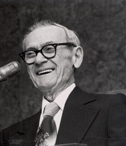 Crabb also served as Secretary of the Texas Medical Board—a position he held since 1941. In 1962, the Texas Medical Board also maintained office space in that city’s Medical Arts Building along with its main offices in Austin. Crabb and FSMB President Louis Jones had served as the primary negotiators with the AMA to secure financial support for an FSMB central office.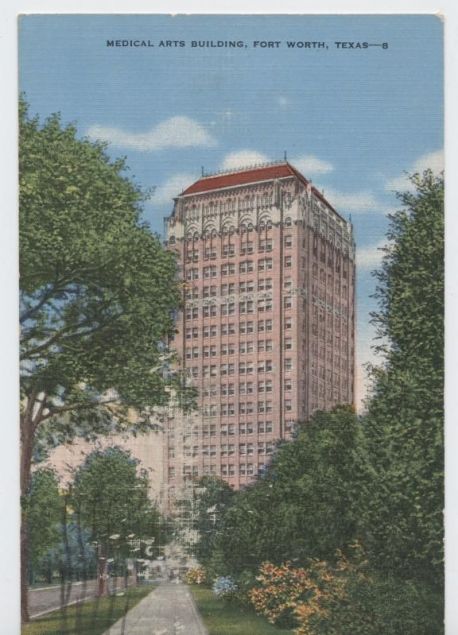
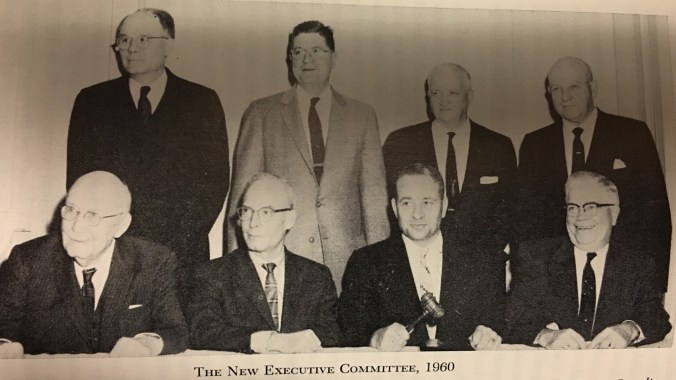
 Another woman, Dr. Barbara Schneidman (1991-92), soon followed. For those interested, Dr. Behren’s shared her personal story in moving amongst governance circles. See vol. 98, no. 2 of the Journal of Medical Regulation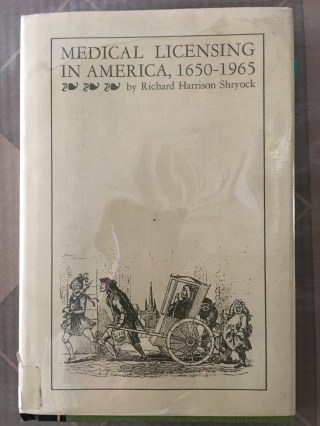
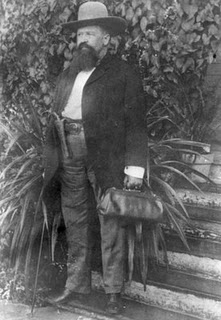 I remember stumbling upon the photo of Dr. Hiram Hampton about 6-7 years ago. Two things stood out at the time. First, the juxtaposition of a medical handbag and a holstered revolver grabbed my attention immediately. Maybe Hiram posed as a pistol-packing physician strictly for the sake of a fun photo? Or perhaps the pose reflected a rough-n-tumble aspect to ca. 1900 Florida now lost to our modern perception of state for its beaches, bikinis, retirees and Disney World.
 The armchair historian