“An institution is the lengthened shadow of one man.” Ralph Waldo Emerson, Self-Reliance, 1841
I remember coming across this quote many years ago and being struck by its pithy expression of a profound truth. One that many of us do not fully appreciate until later in life—when our own experiences and accumulated years bring an understanding that the vagaries of human existence make it all the more remarkable when any company, organization or institution manages to survive beyond a few decades. Longevity stands out in a world littered with Kodaks, Sears, planned obsolescence and unanticipated technical disruption.
Approaching retirement from the Federation of State Medical Boards (FSMB), I cannot help but reflect on the trajectory of my career and the organization that did so much to foster it. Nearly 29 years with the FSMB has offered a life lesson in the ebbs and flows that are a natural part of the life cycle of any long-standing organization. I’ve seen leadership navigate challenges large and small over nearly three decades. Success—both immediate and long-term—is seldom accidental, but the result of a clear vision, steady temperament and a dash of good luck along the way.
I share this because my knowledge of the history of FSMB and medical regulation in this country underscores that some institutions emerge from specific circumstances and survive—as Emerson suggests—due largely to the contributions of a single individual. This blog post represents the first in a series spotlighting the impact of several individuals who proved instrumental to the history and development of medical regulation in this country.
Walter Bierring, MD (1868-1961)
Let me start by saying that I and all my FSMB colleagues should thank Walter Bierring for our jobs. It is not an overstatement to say that if not for him, the FSMB probably would not exist today.
An intellectually curious and ambitious son of Danish immigrants, Bierring attended medical school at the University of Iowa and later pursued training in Europe: Heidelberg (1892), Vienna (1896), Paris (1901). Bierring worked as a medical educator (Univ. of Iowa; Drake) until 1913 when his focus shifted toward professional and regulatory interests. His addition to Iowa Board of Health and later the state medical board brought him directly into the orbit of the FSMB.
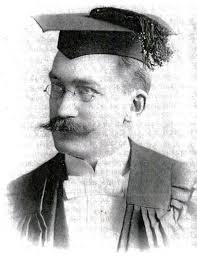
Bierring’s talents and leadership were quickly recognized. In 1916, FSMB President Charles Cook wrote Bierring to confide his belief that the latter was key to the organization’s ultimate success.
“The future of the Federation, as I see it, is today largely in your hands…you know its past history, the pitfalls to be avoided, the problems to be solved, lines of work to be taken up, the danger of its being over-shadowed by other organizations….”
Cook’s prophecy held true. Bierring served as the FSMB Secretary-Treasurer from 1915-1960 and as the editor of the Federation Bulletin during nearly all of that span of time.
Why was Bierring so integral to the FSMB’s success and survival? It’s simple. He served as the key player sustaining the organization at a time when it had no full-time paid staff, no permanent national offices, no specific product/service generating revenue and minimal resources derived from modest membership dues and in-kind resource assistance from the AMA. For more than 45 years the “work” of FSMB was largely sustained by this one man from his home in Iowa. Bierring carried the FSMB through its most trying times in the 1930s and early 40’s. For all intents and purposes, Bierring was the Federation during the organization’s leanest years.
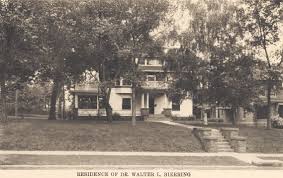
Looking back, it is easy to see that the organization might have slipped into a moribund condition and total irrelevance. Indeed, it might well have collapsed entirely without him. Knowing the FSMB today, this seems unimaginable and yet such an outcome was clearly possible, and ultimately avoided, due largely to Bierring’s contributions and steady hand over four decades.
So how did he do it? Patience, dogged persistence and force of personality. Bierring’s leadership style mirrored the attributes identified by business writers as critical to successful CEOs: humility, curiosity, a collaborative-spirit. Despite the accolades that came his way, Bierring shared credit freely with his colleagues. Over the years he wrote a series of articles highlighting the contributions of other FSMB colleagues. Bierring preferred winning over opponents through reasoned conversation and a bit of charm. As one of his contemporaries described him, Bierring was “always constructive, never destructive.” He preferred quiet diplomacy to direct confrontation—what today we call consensus-building.
When necessity arose, he could be forceful in his own way—particularly in exerting influence. One contemporary described his approach as an “iron fist in a velvet glove.”
Bierring didn’t innovate a product or service; he didn’t blaze new trails on the policy or legislative front. What he understood best was people and how to work with and through them for a desired goal—and at the right pace. For the leader of any membership organization this is a critical skillset. Operating in such a way that you are neither too far in front nor so far behind that you risk losing those you are seeking to lead.
Walter Bierring represented the longest single strand of continuity linking the organizations from its earliest days to the cusp of its resurgence in the early 1960s into the modern organization that exists today. If not for Walter Bierring, it’s unlikely the FSMB would have survived long enough to enjoy that reemergence.
Perhaps a former FSMB President said it best: “…the most fitting and lasting tributes to Dr. Bierring is the Federation itself. This is his true testimonial…he has laid the foundation and it is up to us to build and carry on.
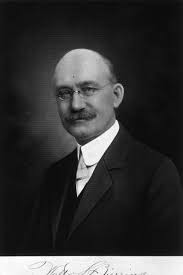
Thank you, Dr. Bierring.
The opinions expressed are those of the author and do not represent the views of the Federation of State Medical Boards.
Source:
This blog post is adapted from chapter 5 of Medical Licensing and Discipline in America: A History of the Federation of State Medical Boards (2012)

