State medical boards and prescribing violations in 1934

A few weeks ago, I came across the fold out chart pictured below in a May 1934 issue of the Federation Bulletin. The data sheet accompanied a paper presented by Harry Anslinger*, the U.S. Commissioner of Narcotics, at the February 1934 annual meeting of the Federation of State Medical Boards (FSMB). The Bulletin also published a transcription of the subsequent Q&A between presenter and audience.

graph Rx chart

The commissioner’s responsibilities, established in 1930 as U.S Treasury Department’s Federal Bureau of Narcotics, included determining the quantity of crude opium and coca leaves allowable into the United States for medical and scientific purposes. Dispensing or prescribing derivatives of these materials fell under the Harrison Narcotics Act (1914), legislation ostensibly enacted as a tax/revenue measure though its underlying purpose and subsequent enforcement ultimately regulated and limited access to narcotic drugs such as opium.

The legislation required authorized practitioners (e.g., physicians, dentists) to register with, and pay a small tax to, the federal government (Treasury Dept.) to legally prescribe narcotic drugs. In due course, the legislation helped to effectively criminalize drug addiction rather than handling it as a disease or medical condition requiring treatment.

As interpreted by law enforcement, the Harrison Act also allowed for prosecution of physicians who prescribed to addicts. Authorities pointed to the language in the law describing allowable prescribing as something done “in the course of his professional practice only.” Drug addicts were not patient according to law enforcement. Thus, prescribing to them became illegal. Initially, the US Supreme Court supported this approach with two decisions (Webb v. US, 1919 and US v. Behrman, 1922) that upheld prosecutions against physicians prescribing narcotics to comfort addicts in withdrawal or as part of “cure” programs.

Federal prosecution of physicians under the Harrison Act was later struck down by the U.S. Supreme Court (Linder v. United States, 1925) as the court cited the regulation of the practice of medicine as a state prerogative. Thus, it fell to the individual states to regulate, and if necessary prosecute, illegal prescribing as a violation under their state’s medical practice act.

So how do state medical board figures into all this? Let’s go back to the pictured chart. The data—while confusing with its densely packed columns and small font headings—reflected cases brought by Anslinger’s office against 705 physicians between October 1, 1930 and December 31, 1932.  The commissioner’s office had been working with state boards so that they could take appropriate action involving their licensees.

The commissioner lauded the cooperation his agency had received from multiple state medical boards and, in particular, Dr. Charles Pinkham (Executive Secretary for the California Medical Board).

pinkham

Yet at the time of his presentation to the FSMB in 1934, 488 cases (nearly 70%) were still pending any formal action by a state medical board. While the wheels of justice understandably turn slow, Anslingre’s presentation sounded a note of concern that they may have ground to a halt entirely in many of these cases.

Explanations for the backlog and what initially appeared to be state board inactivity came out in the Q&A. Much of the problem arose from state law—usually a critical absence of clear authority allowing the board to act. For instance, the medical practice act in several states did not have narcotic violations as a basis for a license revocation. In nearly two dozen states, license revocation was tied to violations of state law—not federal law such as the Harrison Act.

In other instances, license revocation was the only sanction open to the board. For example, in Minnesota, the board’s only option for a physician’s violation of a narcotics law or in cases of drug addiction was to revoke the license. The board did not have the option to temporarily suspend a license for a physician seeking to rehabilitate. Similarly, the board had no authority to reinstate a medical license once it had been revoked. Noting this reality, a Minnesota board member admitted, “We hesitate to revoke.”

Americans have a tendency to wax nostalgic about the past—to view a time period like this one eighty years ago as somehow “simpler” than our world today. I shared this piece from 1934 to underscore the complexity of medical regulation even then. Regulators faced a challenging interplay of state and federal actors and competing philosophies in addressing substance abuse. They labored under imperfectly drawn state laws that sometimes handcuffed them in trying to address (in a fair and reasonable manner) cases involving their licensees.

Certainly, they weren’t perfect. A backlog of 488 cases is tough to explain without acknowledging that other factors were probably at work too—resource limitations; protection of fellow physicians, etc. I’ll dedicate space in this blog soon to talk about medial boards’ disciplinary function.

[* If the name Harry Anslinger seems vaguely familiar to you, it is likely because of recent stories concerning the U.S. Dept. of Justice’s pushback against state laws legalizing recreational use of marijuana. Authors studying the criminalization of marijuana in the US point to Anslinger’s controversial efforts and ‘racialization’ of the issue beginning around 1936-37]

The opinions expressed here reflect the views of the author and do not represent those of the FSMB.

Sources

H.J. Anslinger, “Traffic in Narcotic Drugs,” Federation Bulletin (May 1934): 136-147.


“McTeague” – one casualty from a profession in transition

My forthcoming book, Diploma Mill (Kent State Univ. Press, September 2018) shares the story of Dr. John Buchanan and his criminal activities in selling medical diplomas. Johnson_Diploma Mill_amazon (002)Without question many of the men purchasing these diplomas were frauds and charlatans eager to cash in on the vulnerability and suffering of unsuspecting patients. These were the early days of medical regulation but already medical boards had the holders of these diploma mill degrees in their sights.
…and yet, there was another group impacted by the rise of medical regulation, a group whose situation deserved genuine consideration. These individuals were neither charlatans nor quacks. The advent of state-based medical regulation and the requirement for a medical license posed a challenge to many practicing physicians. It meant a transition from the long preceding period of American medicine featuring informal or ‘on acceptance’ criteria for those who would practice medicine to a new era characterized by formal requirements (e.g., a medical degree) established under the auspices of a state medical board.

Several generations of physicians in post-Civil War America had been practicing medicine for many years with varying degrees of success in the eyes of their patients and communities. They often possessed no formal medical degree. Their education may have been a full or partial course of lectures from what modestly passed as a medical college. More likely, it may have involved self-study and working for a period of time with a practicing physician—a kind of a mentor/teacher relationship that may even have been sufficiently formalized as to call it a preceptorship. While there were certainly many outright frauds and charlatans who purchased one of Buchanan’s medical degrees, there were likely just as many purchasers—if not many more—who fell into this category. These were individuals with a genuine interest in medicine, who had been practicing for many years but with no formal credential to their name…individuals who saw the acquisition of a diploma as a formality incumbent upon them under the new era of state regulation of medicine.

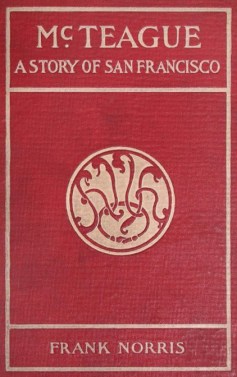
This transitional era when a profession such as medicine or dentistry moved inexorably toward a formal, state regulatory environment saw its share of casualties in the process. One of the most memorable reflections of this comes from the American writer, Frank Norris, in his 1894 novel, McTeagueMcTeague_First_Edition_cover

Norris traced the moral and financial disintegration of a San Francisco dentist and his wife (Mac and Trina McTeague) who failed to navigate the transition from the pre-professional era of uncredentialed practitioners to the professional, state regulatory environment in which a degree (medical or dental) was the expected norm.[1]  McTeague’s undoing comes in the guise of a non-descript letter from the city of San Francisco carrying a notice from the state of California informing him that, lacking a degree from a dental college, he was no longer entitled to work as a dentist. A befuddled McTeague hands the letter to his wife who, in reading it through, slowly begins to understand her husband’s now precarious situation.

“Why, what’s all this?” said Trina, calmly.

“I don’ know,” answered her husband.

“You can’t practice any longer,” continued Trina,— “is herewith prohibited and enjoined from further continuing—“

“I got it this morning,” murmured the dentist. “It just now came. I was making some fillings…”

“Say Mac,” interrupted Trina, looking up from the notice, “didn’t you ever go to a dental college?”

“Huh? What?” exclaimed McTeague.

“How did you learn to be a dentist? Did you go to a college?”

“I went along with a fellow who came to the mine once. My mother sent me. We used to go from one camp to another. I sharpened his excavators for him, and put up his notices in the towns—stuck them up in the post offices and on the doors of the Odd Fellows’ halls. He had a wagon.”

“But didn’t you never go to a college?”

“Huh? College? No, I never went; learned from the fellow…”

“But do you know you can’t practice unless you’re graduated from a college? You haven’t the right to call yourself, doctor.”

McTeague stared a moment…“Why, I’ve been practicing ten years. More—nearly twelve.”

“But it’s the law.”

“What’s the law?”

“That you can’t practice, or call yourself doctor, unless you’ve got a diploma.”

“What’s that—a diploma?

“I don’t know exactly. It’s a kind of paper that—that—oh, Mac, we’re ruined.” Trina’s voice rose to a cry.

“What do you mean, Trina? Ain’t I a dentist? Ain’t I a doctor?”

This life altering scene concludes with a ring at his office door. McTeague rises to get up to treat his scheduled patient only to have his wife grab him with a sudden sense of panic. The letter from City Hall has left her fearful of the implications should her husband disregard the letter and continue to practice. “But you can’t. Mac, don’t you see? They’ll arrest you. You’ll go to prison. You can’t work…We’re ruined.”

While McTeague is a work of fiction, Frank Norris embedded his story in the realistic landscape of a late 19th century American city (San Francisco) as it edged itself into world of professional regulation. Norris wasn’t actually interested in this transition period per se or the workings of an emerging regulatory system. Instead, this transition serves his dramatic purposes for setting in motion the chain of events sending Mac and Trina into downward financial and moral spiral.

…and yet, even with the grandfather clauses that attempted to accommodate so many legitimate practitioners, I can’t help wondering: How many real-life McTeagues were created in the transition to a professional regulatory model?

The views expressed are those of the author and not the FSMB.

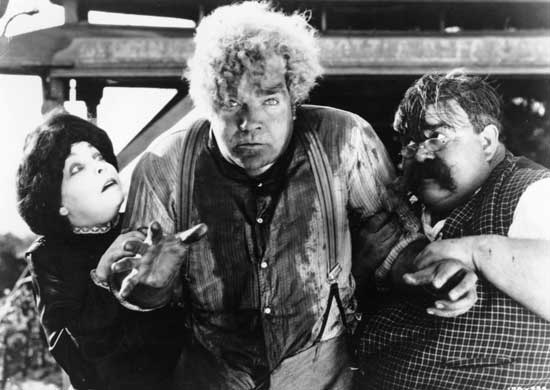
[1] Norris’ McTeague served as the basis for one of the silent era’s greatest films: Erich von Stroheim’s Greed (1924). Still shot below90614-004-FAE9BC5C


A few numbers and some thoughts on the medical licensing exam

graph photo  Few of us spend much time thinking about numbers; yet they’re immersed in our daily lives. Most of the numbers we think about are mundane—shoe sizes, bank statements, calendar dates. Others reflect serious matters such as the 2.0 degree Farenheit increase in the earth’s average surface temperature since the late 19th century.
We’ve all heard that “numbers don’t lie.” This is true in a manner of speaking as the scoundrel is really their author rather than the number itself. Take, for example, the recent national dialogue concerning wealth and income distribution in the United States. A writer’s decision to report mean rather than median household income may reflect an attempt to minimize such concerns using a valid though misleading number.

We also understand that numbers in the form of data can inform our decision-making in positive ways—including some that are not necessarily intuitive. Michael Lewis’ Moneyball spawned not just a great accompanying movie but a partial reversal of baseball culture as the gut-instinct decisions of scouts, managers and other ‘experts’ and traditional statistics (ERA, batting average) are now tempered by data-driven metrics that reconsider the value of some of these same statistical categories.

Numbers offer a linguistic shorthand. Most of us could list English language idioms featuring numbers: the impossible conundrum is a “catch 22,” to “deep six” a negative report is to metaphorically bury it, the shoplifter’s “five finger discount.”

I say all this to preface a few numbers—and some accompanying thoughts—on the medical licensing exam.

953,000 nine hundred fifty-three thousand 953k

According to the Federation of State Medical Boards, at the end of 2016 there were 953,695 physicians in the United States with an active medical license. It is a diverse group. The majority of these 953k are men (64%) but that figure is sloping slowly downward based upon the enrollment figures showing more women than men in US medical schools. Most of these physicians hold the MD degree but a growing number (8%) are osteopathic physicians holding the DO degree. Many of these licensed physicians are early in their career (22% aged 30-39) though a much larger group is at the backend of their practicing career (29% aged 60-79). In addition, twenty-three percent of this 953k are international medical graduates (IMGs) who graduated from a medical school outside the US. One could dedicate an entire book to exploring the ramifications of these numbers and the trends behind them.

2 two zwei 2

Despite this diversity, there is one thing all 953,000 of these physicians have in common—all of them took a medical licensing examination. Osteopathic physicians generally take the Comprehensive Osteopathic Licensing Examination (COMLEX-USA). However, the vast majority of America’s physicians—including every MD and IMG—took the United States Medical Licensing Examination (USMLE) or one of its predecessor exams.

We’ve made great progress in getting down to just two exams (see below). I can’t help wondering if ultimately we will end up with a single examination pathway for medical licensure.

50 fifty 50 funfzig 50

Though the USMLE has only been in existence a little over a quarter of century, already 50% of this nation’s physicians with an active medical license have taken all or part of the USMLE sequence. While the testing culture in the United States has come under scrutiny and criticism for some time, one fact remains—the examination required by state medical boards for licensure represents a de facto independent audit of the education and training of these prospective physicians.

This is a far cry from the late 19th century origins of medical regulation when every state developed and administered its own examination for licensure. One of the predictable outcomes was obvious: Every state had a high degree of satisfaction with their exam while casting a skeptical eye toward just about every other state’s exam. The result being a duplicative approach to licensing that discouraged license portability by usually requiring even the experienced practicing physician to retake a licensing examination.

140,000 one hundred forty thousand 140,000  140k

Collectively, the USMLE administers 140,000 tests each year. This large number may surprise. Now think for a moment about the resources (technical, financial, manpower) required to develop, maintain, administer and oversee a national examination program like this. These demands are significant and well beyond the resources available to individual state medical boards to conduct such a stream of work on their own.

This is the biggest reason why state medical boards got out of the business of developing their own examinations back in the 1960s and 70s. Even Puerto Rico—the only remaining state or territory in the US developing its own medical licensing exam—has finally halted its exam (at least temporarily) under the mounting financial pressures facing that island.

39 thirty-nine 39 trente-neuf 39

In 2016, IMGs accounted for 39% of all USMLE test administrations. A portion of these physicians are seeking to gain certification from the Educational Commission for Foreign Medical Graduates in order to secure residency training in the US before returning to their home country.

However, many, if not most, have aspirations for becoming fully licensed, practicing physicians in the US. This reflects a significant, long-term trend dating back to the massive dislocations arising from World War II and the subsequent influx of émigré and refugee physicians by the late 1940s and early 1950s. Most Americans are blithely ignorant that this country has met, and continues to meet, its physician workforce needs by relying (in part) upon practitioners educated and trained by other countries. Depending on your perspective this is either an unconscionable “brain drain” depriving the host countries of a valuable medical resource or evidence of the continued real and perceived economic opportunities attracting individual physicians to America.

5 cinco 5 five 5

The fail rate for medical students and graduates of US medical school program issuing the M.D. degree and taking the USMLE for the first time is roughly 5%. Non-physicians and those unfamiliar with medical regulation are probably surprised by this number. They wonder, “Shouldn’t it be higher?”  To them, 21st century medical knowledge is so daunting in its depth, breadth and unfamiliar terminology that achieving anything close to mastery in the field must feel like a Sisyphean task.

But step back for a moment and think about it. Medicine in the United States attracts academic star performers, classic over-achievers and those who excel on standardized tests. Schools already winnow the field of incoming matriculants through a set of criteria demanding academic excellence at the undergraduate level and a strong performance on the Medical College Admission Test (MCAT). Once on campus, educational support systems kick-in to assure success among an already strong talent pool of highly motivated erstwhile physicians.

Of course, we could shade the discussion differently by presenting this figure in a reverse fashion. Instead of sharing a fail rate, we could present this as a 95% pass rate—an approach likely to trigger an opposite reaction, “Why is the pass rate so high?” Uh oh. I seem to have returned to the territory of that “numbers don’t lie” assertion. I’ll stop here…for now.

The opinions expressed here reflect the views of the author and do not represent those of the FSMB.

Sources

Young, Chaudhry, Pei, Arnhardt, et. al. A Census of Actively Licensed Physicians in the United States, 2016 (Washington DC: Federation of State Medical Boards, 2017)

Donald E. Melnick, Licensing Examinations in North America: Is External Audit Valuable? Medical Teacher 2009; 31:212-14

USMLE aggregate performance data available at http://www.usmle.org/performance-data/

DA Johnson, HJ Chaudhry, Medical Licensing and Discipline in America: A History of the Federation of State Medical Boards (Lanham, MD: Lexington Books, 2012)

Medical Regulation and the Doctrine of Police Powers

Have you ever talked to a four year old about something they either couldn’t or didn’t want to understand? Remember their sing-song reply, “Why?”

Their persistence in responding to every explanation with that question could drive anyone to side with Sartre – “Hell is other people”

Not that I’ve had any four year olds asking me why we have medical regulation though some critics of our system do seem to have the intellectual willfulness of a child. For the benefit of those interested, I’ve considered the question (“Why do we have medical regulation?”) from a historical/legal perspective.

Many of us understand the nature of the 10th Amendment; and if we thought about it, we’d recognize that a state granting a medical license to a physician rather than the federal government doing so seems like a concrete example of that amendment. So medical regulation is all about the 10th amendment, right? Not entirely.

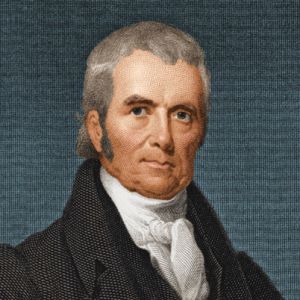
What we tend to forget is an accompanying legal concept—the notion of “police powers” held and exercised by the individual states. The meaning and implications of both the 10th Amendment and this concept evolved through a series of court cases in the 19th century. Chief Justice John Marshall explicitly used the term in Brown v. Maryland (1827) though, interestingly enough, the phrase “police power” does not appear in the Constitution and did not enter common parlance in legal circles until the 1880s.

Mention the phrase “police powers” to someone on the street today and they’ll likely latch onto the word police and say this must have something to do with law enforcement. This misconception obscures the Founders’ understanding and use of the concept. Revolutionary era leaders understood the term “police” as synonymous with the public polity, the community, civil administration and public order.

The concept of police powers evolved as a bulwark against federal incursion into state authority and decision-making.  A series of important cases during John Marshall’s tenure as Chief Justice of the U.S. Supreme Court confirmed this, e.g., McCullough v. Maryland (1819) and Gibbon v. Ogden (1824). In Gibbon, Marshall famously expanded on the division of federal and states powers with a tautology: “Enumeration presupposes something not enumerated.” In other words, the fact that the Constitution lists specific powers for federal government—and those powers are limited to the things listed—means there must be other powers that are not listed which rest with the states.

john-marshall-9400148-1-402

What might these be?  Marshall identified “inspection laws, quarantine law, [and] health laws” as examples of legislation “exercised by the States themselves.” Three years later Marshall introduced the term “police power” explicitly in Brown v. Maryland, calling it an authority that “unquestionably remains…with the States.”

While Gibbon dealt with interstate maritime commerce, it is not surprising that Marshall looked to a parallel area (health) as an example of state powers and their scope of authority. Colonial and later state governments during the early republic were accustomed to exercising a de facto regulatory function in the realm of public health. The population centers situated along transportation routes on rivers and coastal areas meant this country experienced frequent outbreaks and recurrences of epidemic diseases such as yellow fever, typhoid, cholera. A major yellow fever outbreak in Philadelphia and New York (1793-98) and recurrent cholera epidemics (1832, 1849, 1866) meant that local and state officials were accustomed to enacting emergency quarantine and other sanitary measures. Local authorities viewed these measures as justifiable actions designed to secure the public health by mitigating the effects of contagious disease.

The practical experience of local and state officials in dealing with health crises should not be overlooked when considering the advent of medical licensing laws and examining boards in the post-Civil War era. While many factors contributed to the rebirth of medical licensing in the second half of the nineteenth century, the experiences of state and local officials in dealing with health crises made it easier for the courts to view health matters as appropriate matters for state authority under the doctrine of police powers…and thus, an area that can and should be regulated.

Even before the seminal court case upholding medical regulation (Dent v. West Virginia, 1889), the U.S. Supreme Court recognized the practical and societal need for laws and regulations to guard the general public interest against the “few who…[would] imperil the peace and security of the many.” (Mugler v. Kansas, 1887) This would be true whether the “few” were quack physicians or, in the case of Mugler, whiskey peddlers. The police powers doctrine meant the state could enact “measures…appropriate or needful for the protection of the public morals, the public health or the public safety.” (italics added)

So if you find yourself sitting among physician colleagues and talking in general terms about medical regulation, feel free to impress them with your explanation of police powers and the 10th amendment…and if you can inject the word “tautology” into the explanation, award yourself double bonus points.

The views expressed are those of the author and not those of the FSMB.

Sources

Santiago Legarre, “The Historical Background of the Police Power,” Journal of Constitutional Law (February 2007): 778, 782.

Gibbon v. Ogden, 22 U.S. (9 Wheat.) 1, 203 (1824).

Brown v. Maryland, 25 U.S. (12 Wheat.) 419, 443 (1827)

Edward P. Richards, “The Police Power and the Regulation of Medical Practice: A Historical Review and Guide for Medical Licensing Board Regulation of Physicians in ERISA-Qualified Managed Care Organizations,” Annals of Health Law 8:1 (1999): 203-204.

Charles E. Rosenberg, The Cholera Years (Chicago: University of Chicago Press, 1962) and Owen Whooley, Knowledge in the Time of Cholera: The Struggle over American Medicine in the Nineteenth Century (Chicago: University of Chicago Press, 2013) address quarantine measures


A Beautiful Friendship

Several of my recent tweets (@davearlingtontx) featured the National Board of Medical Examiners or NBME. I have been fortunate in my professional career at the Federation of State Medical Boards (FSMB) to have spent two decades working with colleagues at the NBME on our jointly-sponsored program, the United States Medical Licensing Examination® (USMLE®).

In thinking about the FSMB-NBME relationship I am reminded of the last line from the movie Casablanca. As Humphrey Bogart and Claude Rains stroll across a misty airport tarmac, Bogie says “Louis, I think this is the beginning of a beautiful friendship.”

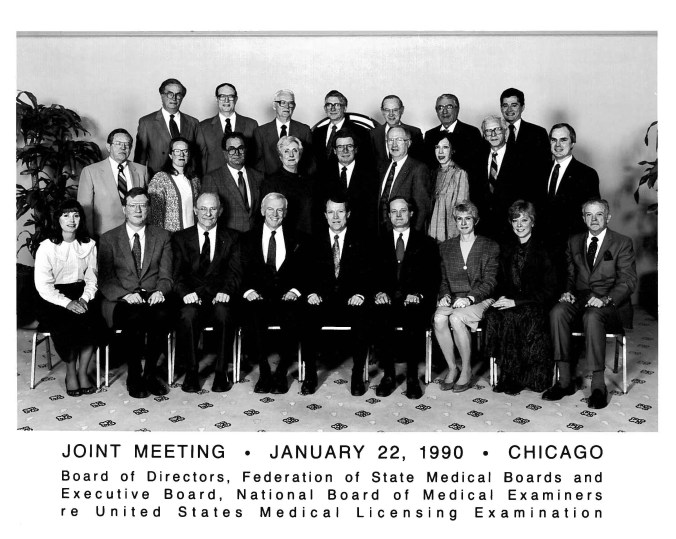
FSMB and NBME joint mtg in 1990

And while I don’t suppose any of the key figures from the earliest days of either organization said it quite so starkly, surviving evidence strongly suggests that friendship and mutual respect characterized the relationship then and now. This manifested itself with the FSMB’s early support of the NBME and the launch of its certifying examination in 1916 and later when the Federation turned to the National Board in the 1960s when the two collaborated on a national examination specifically for medical licensure, the Federation Licensing Examination or FLEX. Personal connections were at the heart of the relationship with a key figure in both organization’s early years, Walter Bierring, serving on governance of both executive boards; and this deepened with “cross pollination” that witnessed nearly three dozen individuals serving on the governance of both organizations. Today, the relationship centers especially around the deep workings of the two organizations around the USMLE. (A more detailed account of the FSMB-NBME relationship appeared in the Journal of Medical Regulation, vol. 100, no. 4, 2014, pp. 17-20 at http://jmr.fsmb.org/archives/)

I share all this because of an observation I remember hearing from a former President at the NBME. Reflecting on the close working relationship of the two organizations spanning so many decades, he marveled at how unique this felt, particularly as such a relationship seemed wholly unimaginable in the for-profit world. I think he was right. In a for-profit environment of bottom line revenues, shareholder returns and cutthroat competition, this kind of relationship simply doesn’t exist—and if it did, it wouldn’t last. One party would eventually seek to leverage a temporary or strategic advantage in the relationship to force either a merger or an ouster of the other party. One of the beauties of the FSMB-NBME relationship in support of the USMLE is the common use of pronouns like “us,” “our” and “we” by staff at both organizations working on the program.

In a way, this speaks to the fundamentally different nature of not-for-profit organizations (NPOs)—with their explicit mission usually pertaining to a specific societal benefit—which manifests an organizational culture more amenable to the kind of collaborative endeavor and relationship such as that between FSMB and NBME. This relationship has benefited medical regulators for more nearly fifty years.

In the early to mid-1960s, two trends in the functioning of state medical boards shifted in noticeably opposite directions. At that time, physician discipline assumed an increasingly prominent position in the work of state medical boards—one requiring not only a paradigm shift in medical regulators’ views of their own role but also a marked increase in the direct resources (both staff, time and intellectual focus) directed to this function. At the same time, medical boards’ recognized that the science of assessment had outstripped their capacity to develop and deliver sufficiently high quality examinations for medical license based upon the limited expertise and resources available to most boards.

This recognition led directly to the creation of the FLEX, the first large-scale, formal collaborative endeavor between the FSMB and the NBME. The relationship that deepened over time between the two organizations in their efforts on FLEX and later USMLE provided a direct benefit to the medical regulatory community. The involvement of the FSMB in this relationship meant that the priorities and interests of the medical regulatory community featured directly and prominently in the national programs for the assessment of physicians. The involvement of the NBME in this relationship brought professional and technical expertise to one of the most visible and fundamental elements in the medical regulatory process.  The success of this relationship through these assessment programs allowed medical boards to more effectively meet public expectations demanding greater accountability and transparency in their disciplinary function while simultaneously improving the boards’ collective role in assessment.

It is worth noting that success was never guaranteed. I have personally heard anecdotes from long-tenured staff at the NBME about tensions that periodically arose between medical educators and medical regulators working on various committees supporting the FLEX and later USMLE. These anecdotes date to activities that occurred twenty and sometimes thirty years ago when strong personalities tackling potentially divisive issues might have led some to wonder about the viability of the long-term working relationship between FSMB and NBME. The relationship survived (and thrives today) due in part to the alignment of the mission, vision and values of the two organizations. But just as important are human relationships tying the two organizations together. The glue that preserved these working relationships were the staff at the two organizations and the commitment of senior leadership and governance to nurture an effective long-term relationship.

We may think in generalized terms of organizations and boards but it is individuals that comprise these entities. These broader relationships flourish or suffer depending upon the inter-personal element that exists at the level of individuals from two different organizations working collaboratively. The ultimate success in fostering trust and mutual respect in the organizations’ working relationship stems directly from the daily activities of colleagues working toward a shared purpose serving both organizations’ mission and, in doing so, the interests of medical regulation and society at large.

So here’s to my colleagues past and present who have created and maintained this unique, vital relationship: Hank, Don, Jim, Peter, Gerry, Kate, Amy, Susan, Frances, Janet, Suzanne, Debbie, Michael, Shelley, Randy, John and so many others.

The views expressed in this blog are solely those of the author and not that of the FSMB

Prescriptive power and value of the medical license

One of the foremost stories in American medicine continues to be the epidemic of opioid misuse. According to the National Institutes for Health, every day more than ninety Americans die as a result of overdosing on opioids. This translates into roughly 33,000 people annually – the equivalent of a 320-passenger Boeing 777 crashing every three and a half days.

From the perspective of medical regulators, one of the sad realities is the knowledge that a portion of this epidemic stems from the inappropriate (and sometimes illegal) prescribing of opioids by a small number of physicians. Medical boards dedicate significant resources to educating their licensees about appropriate prescribing. They work collaboratively with the pharmacy boards and prescription drug monitoring programs in their states—though the inter-state operability of these programs is frustratingly limited. They work with law enforcement to target and close “pill mill” operations.

I could not help but reflect on this current situation after my recent tweet (@davearlingtontx) about prescribing issues that long pre-date today’s opioid crisis. Notice the photo below and the drug stamps affixed to the back of this 1940 Virginia medical license.

VA back of license

This blog entry, however, is not about prescribing so much as it is about the “value” of the medical license as a credential—one that has served to various degrees as a powerful attractant to a small number of criminally inclined individuals.

Consider this. In the post-Civil War era, individual states adopted laws regulating the practice of medicine. Many of these started as simple registration laws merely requiring that a physician present himself to a county clerk and show a medical degree.  Other states started with comprehensive legislation creating a board of medical examiners to review the credentials and administer examinations of prospective licensees. As medicine developed into a legitimate profession in the last quarter of the nineteenth century, this meant that the medical degree—and by extension the medical license took—on a monetary value not previously associated with it. As professional standards coalesced and solidified, this meant that the medical degree became the gateway credential to a medical license…and with it, after the turn of the century, prescriptive authority enjoyed by few others once the Harrison Narcotic Act (1914) and Volstead Act (1919) took effect.

This is, in part, the reason why medical diploma mills exploded in the last quarter of the nineteenth century. Admittedly, other factors were at work. Here I am thinking of poorly drawn state statutes for issuing educational charters and the absence of any true accrediting body for medical education. Yet make no mistake, the explosion of diploma mills reflected an economic incentive around the new-found monetary “value” of a medical degree and with it, the medical license.

It was no accident that the early issues of the Bulletin of the Federation of State Medical Boards often featured news items reporting a stolen medical license and alerting medical boards’ executive secretaries to be on the lookout. Also common were early 20th century versions of ‘manufactured’ or bogus credentials that were just good enough to get past sometimes weak vetting by medical boards. Another tactic was a kind of medical identity theft. The Bulletin carried numerous stories detailing precisely how unscrupulous individuals assumed the credentials, and thus the identity, of physicians—usually stealing the identity of retired or deceased practitioners.

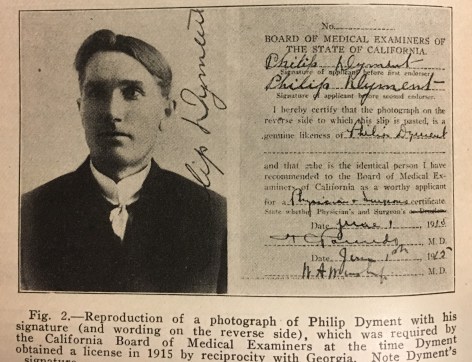
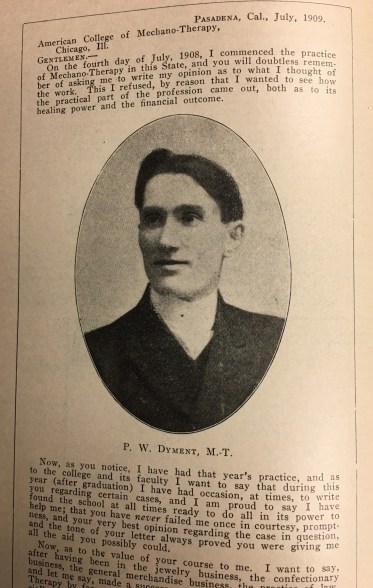
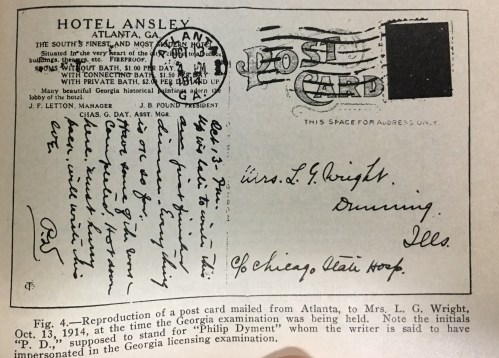
All of these tactics flourished because of inadequate communication between licensing boards and their use of sometimes lax procedures to verify credentials.  But if you strip away the tactics behind these headline grabbing stories, their overriding motivation rested upon the fundamental shift increasing the value of the medical license. As the medical license grew in its potential for socio-economic advancement and later its authority in prescribing controlled substances, the monetary value of the license grew dramatically. Money attracts—not only those inspired by the humanitarian spirit of the healer but those with criminal intent. In a later blog piece I will share the story of Phillip Dyment, one of the many early 20th century criminals attracted to the medical license as an avenue for illicit financial gain.

The views expressed in this blog are solely those of the author and not that of the FSMB

1961: The End of “Doctors Only”


In 2017, one aspect of medical regulation that those of us involved in the field tend to take for granted is the presence and participation of public members on state medical boards.  We don’t really think too much about this since public members have been part of the regulatory landscape for decades. After all, 22% of the composition of all state medical boards today can be defined as “public” members, i.e., individuals who are neither physicians nor working in an allied health profession. (Note: The percentage rises to 29% if one defines public as non-physician.) Every state medical board with the exception of Alabama, Louisiana and Mississippi have non-physicians sitting as full, voting members on their state medical board. I have to admit that I still find it puzzling that any boards remain outliers in this regard today.

Public members are even a common feature on the governing boards for many of the organizations comprising the “House of Medicine.” [1] Recent research undertaken by the Federation of State Medical Boards looked at the presence of public members on the governing boards of various House of Medicine organizations involved in accrediting, certifying, assessing, educating and licensing physicians. Eleven out of sixteen organizations surveyed report having public members on their board governance.

With public members such an ingrained presence in the current landscape, one might be forgiven for wondering, “Has it ever been any different?”

In 1961, California became the first state to add public members to its state medical board. This represented a significant development in medical regulation as it reflected growing public and media interest in the work of state medical boards…and with this interest, a growing chorus of demands for greater accountability and transparency. No single factor accounted for this shift though the weakening of physician paternalism and the growth of a public/consumer culture played major roles.

Calif book

Through most of their history, state medical boards existed as the exclusive domain of physicians—an extension of their professional responsibility as well as their privilege as an almost completely self-regulated profession. Once California broke ranks, the paradigm shift away from insular, physician-dominated regulation to a more inclusive, transparent model gathered momentum—though admittedly slow and fitful.

By 1976, public members still represented only 10% of all state medical board members nationally. The percentage didn’t approach its current figure until 1996 when it reached 21%. Similarly, more than two decades after California set a new standard, the number of boards with public members had risen to only 28. By the late 1990s, the total reached its current level.

Complementing this shift in board demographics, state legislatures in the 1960s and 1970s moved increasingly to shift state medical boards under larger, umbrella agencies (e.g., Department of Health; Department of Professional Regulation). By the mid-1960s, state medical boards resided under umbrella agencies in 16 states. By the mid-1980s, this number nearly doubled with 31 states repositioning state medical boards in this manner. This created lines of accountability directed to individuals (i.e., agency heads) who were neither physicians nor necessarily overtly sympathetic to the medical profession. [2]

In discussing the shift away from a regulatory model drawing solely upon physician regulators to one inclusive of non-physicians, I have focused more on timing and a few numbers. Left unexplored (for now) is the value gained by this new model common to today’s regulatory landscape.

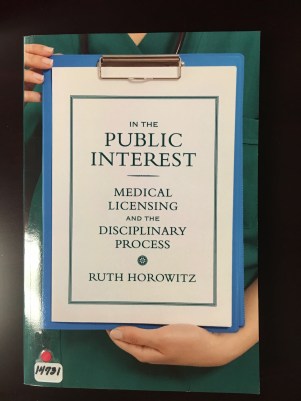
Though I leave that topic for another day, I’ll end with a quote from In the Public Interest (Rutgers, 2013), by the sociologist Ruth Horowitz.

ruth h book cover

With her academic training and stint as a public member on two different state medical boards, Horowitz brings a keen eye to the structure, dynamics and interpersonal factors at work in medical regulation. Reflecting upon the state of medical regulation and her own experiences, Horowitz noted that even well-intentioned professionals accumulate “blind spots” through the inevitable acculturation process of becoming a professional, working among like-minded colleagues, training in similarly-oriented institutions, etc. “History shows that, left to their own devices, doctors tend to police themselves in a manner that does not always coincide with the public good.”  Horowitz sheds no tears for the demise of the old (pre-1961) regulatory model. Neither should we.

Views expressed in this blog are solely those of the author and not that of the FSMB.

[1] P.R. Alper introduced this phrase in his article, “The House of Medicine,” Western Journal of Medicine (1977): 235-36.

[2] See Johnson, Chaudhry, Medical Licensing and Discipline in America, 168-172.

Medical licensing exams ca. 1911

For more than a century, a common rite of passage for physicians in the United States has been to sit an examination for a medical license issued by one of this country’s state medical boards.

One of my recent tweets (@davearlingtontx) shared questions from a 1911 exam conducted by the Nevada Board of Medical Examiners. I suspect those physicians whose test experience derives from their encounters with today’s examinations (USMLE or COMLEX-USA) might feel smug looking at these items from the Nevada board. With a martyr’s pride they might reflect on their long days laboring over 300+ multiple-choice question tests and 12-station standardized patient encounters as part of their multi-step examination process…and maybe hear an Oliver Twist voice in their head saying, “Please, sir, may I have a 10 question test!”

Nevada exam questions

That reaction would be understandable. After all, there is a human tendency in reflecting upon the past to view those periods preceding ours as somehow less sophisticated or lacking the complexity we perceive as uniquely characteristic of our own era.  Of course, this mental filter blinds us to our own bias—one predisposing us to assume greater sophistication for ourselves simply because we enjoy the advantage of hindsight unavailable to those living in the immediate present of a century ago.

Getting back to those questions from the Nevada medical icensing exam, such a reaction is unfair for several other reasons. First, the questions shown here are merely an excerpt—just one small portion of the Nevada exam. These questions derived from just the section on Bacteriology and Hygiene.

Like virtually every state medical board of a century ago, Nevada’s written exam for medical licensure was a multi-day affair.  Instead of the multiple-choice format familiar today to school children and medical students alike, constructed response formats such as open-end extended response or essay questions represented the predominant testing format for most state medical boards. Typically, candidates for licensure faced a battery of exams in multiple subject areas, usually with ten questions in each area.

Take this example from Minnesota. That state’s written exam covered three non-compensatory major topics (medicine, surgery and OB/GYN) and several minor topics (anatomy and physiology; therapeutics; materia medica; diseases of the eye, ears, nose, throat; medical jurisprudence). So the candidate for licensure faced several days of testing to answer roughly eighty extended response test items. And three of the subject areas (medicine, surgery, OB/GYN) each had to be passed outright. Think about the mentally draining task that represented!

However, the medical licensing exam in many states did not stop there. This brings us to the second reason it would be unfair to denigrate the licensing exams of a century ago.  In many states, a multi-day cognitive assessment, focusing heavily on the body of medical knowledge possessed by the licensure applicant, represented just one part of the board’s assessment. It was not uncommon for medical boards to supplement these exams with an oral or interview component as well.

As if a written test and oral exam/interview were not enough, medical boards of a century ago wielded yet one more assessment tool. This one will probably surprise you. In addition to assessing cognitive knowledge, many states required a “practical” examination as well.

Minnesota, Ohio and Massachusetts were among the first states to require a practical exam beginning around 1908-1909. This typically involved real-world physician tasks directly related to patient care: taking a bedside history; conducting a physical examination; rendering a diagnosis. All of these activities then served as the basis for an interview. Within that setting the interviewing board member(s) might explore the clinical reasoning and judgment of the individual examinee.  By 1918, roughly seventeen state medical boards conducted both a cognitive and practical assessment of physician candidates for licensure.

The ambitiousness of this undertaking is all the more remarkable considering efforts like this pre-dated by nearly a decade the first efforts of the National Board of Medical Examiners (NBME) to assess clinical skills in 1916. It would be another century before full-scale efforts at clinical skills assessment figured prominently in the nationally administered examinations for medical licensure: the United States Medical Licensing Examination and the Comprehensive Osteopathic Medical Licensing Examination (2004).

So…next time we feel smug and somewhat wistful for a less-complicated, bygone era, it might be wise to remember the Nevada medical licensing exam of 1911: multiple days of testing; written, oral and practical components; and all done in an un-air conditioned building somewhere in that desert state. Yikes. “Please, sir, may I have drink of water?”

Contingency and circumstance in history

Anyone with even a passing interest in history recognizes that contingency and circumstance are every bit the featured players in our unfolding human comedy.

My recent tweets (@davearlingtontx) bring to mind the role played by these forces. I have worked for the Federation of State Medical Boards (FSMB) just shy of twenty years. The organization represents an important player in the medical regulatory landscape though atypically its main offices are not in Washington DC or Chicago or Philadelphia like so main key groups and sister organizations. Instead, our main offices are just outside the Dallas-Fort Worth airport in Texas. Many times over the years, a colleague has asked me: “How did the Federation end up in Texas?”

The answer is an illustration of the role played by contingency and circumstance in the history of one organization. Founded in 1912, the FSMB functioned more like a “virtual” organization during its first half century. Lacking paid full-time staff and a permanent national office, the organization’s roots rested in Iowa with its long time Secretary-Treasurer Walter Bierring and a long line of elected presidents each serving a one-year term of office as head of the FSMB’s board of directors.

The arrangement worked well enough provided no one expected too much from the organization’s volunteer leadership and its shoe string budget. That changed by the early 1960s as perspectives on the role of medical boards began to shift along with the regulatory environment and the expectations for FSMB.

Historically, medical boards had long prioritized examining and licensing as their major functions. Discipline seemed a less critical function—and one that, when undertaken, focused more on maintaining professional boundaries, i.e., running off unlicensed practitioners, pushing back against other practitioners (particularly midwives, chiropractors and even osteopathic physicians in the first quarter of the 20th century).

By the early 1960s, this prioritization had shifted. The AMA’s Discipline Committee released a report underscoring the “veil of secrecy” shielding incompetent physicians and those engaged in unprofessional behavior. Even an internal survey conducted by the FSMB underscored how little the state medical boards seemed to value this basic component of their regulatory functions. Discipline may have once seemed like the red-headed stepchild of medical board priorities but as the 1960s unfolded this posture weakened.

As the winds of change altered the regulatory landscape and sentiments shifted on professional accountability, the FSMB and AMA commenced a series of meetings in 1961 that culminated in an offer too good for the FSMB to refuse. The AMA offered a $10,000 grant carrying two major stipulations. FSMB must (1) establish a permanent national office, and (2) create a data base of disciplinary actions taken by state medical boards. Both organizations saw this as a critical development to undercut the persistent historical problem of disciplinary ‘hide and seek’ carried on by rogue physicians bolting from one state to another just ahead, or in advance of, state board action; and with it the inadequate communication of these actions between boards.

So why did Texas become home for the Federation? The Secretary of the FSMB board of directors at that time, Dr. McKinley Crabb, resided in Fort Worth.

1955-president-mh-crabb    Crabb also served as Secretary of the Texas Medical Board—a position he held since 1941. In 1962, the Texas Medical Board also maintained office space in that city’s Medical Arts Building along with its main offices in Austin. Crabb and FSMB President Louis Jones had served as the primary negotiators with the AMA to secure financial support for an FSMB central office.

FSMB 1st offices in old med arts bld in Ft Worth


Thus, circumstances aligned. Discipline slowly began to acquire its greater emphasis; FSMB represented a logical host for a national disciplinary data base; a Fort Worth physician (Crabb) played a key role in the negotiations; the Texas board had office space, etc. Of course, it is just as likely that FSMB could have ended up someplace else as officers and members of the organization’s board came from all over the country: California, Idaho, Louisiana, New Mexico, Oregon, South Carolina. All of these men had personal and professional connections to the respective medical boards in their state. The FSMB could just have easily been headquartered in New Orleans or Charleston or Albuquerque if a medical board in one of those states had an even stronger desire to host the organization.

In brief, there was no grand design or master plan behind the organization’s headquartering…just contingency and circumstance, the usual unsung but featured players in human history.

(The thoughts expressed here are those of the author and do not represent the FSMB.)

Power, diversity and medical regulation

My recent tweets (@davearlingtontx) in September 2017 featured historical snippets focusing on women in medical regulation. In one I focused on a regulatory trailblazer: Adele Hutchinson, MD. This graduate of Boston University appears to have been the first woman to serve on a state medical board anywhere in the U.S. This occurred surprisingly early–in Minnesota in the 1890s. The fact that two other women (Margaret Koch; Hannah Hurd) succeeded her on the Minnesota medical board seems all the more remarkable considering the male domination of medical boards individually and collectively throughout the majority of their history.

Admittedly, this gender landscape has changed over time. One rough calculation I made in 2011 using records from the Federation of State Medical Boards (www.fsmb.org) indicated that women comprised 40% nationally of all members serving on state medical boards. Similarly, women served as the executive director (i.e., chief staff member) on half of the boards in 2011; a figure that holds true currently.

I can’t help but think about these otherwise random facts when I reflect on a picture like the one below featuring the board of directors of the Federation of State Medical Boards (FSMB) in 1960. Established in 1912, the FSMB served the individual state medical boards of this country both then and now. I have been proud to work for twenty years with this organization.

FSMB leadership 1960

There is nothing particularly remarkable about the photograph. In fact, I could show many more photos just like it of FSMB leadership. Whether plucked from 1930 or 1950 or 1980, the photos would all look very similar in one regard: leadership involved no one of color and no women. This is what power looked like in this country for many years, indeed the vast majority of this country’s history. Pick virtually any area you wish to analyze: business, government, law, medicine. A picture like this is reflective of where power rested in the United States for a long time. A picture of those holding power in any of these areas (in this example, medical regulation) would look a lot like this.

I think this is part of the reason many people look at the Confederate monuments that harken back to this kind of world and power structure and feel they are no longer appropriate today on multiple levels.

I am proud to say that leadership of the organization I work for no longer resembles a photo like this. Still, it gives pauses to consider just how late it was when change finally arrived in these power dynamics. The first woman (Dorothy Bernstein) did not serve on the FSMB board of directors until the 1970s. Dr. Bernstein, coincidentally, came from the Minnesota medical board. Yet, her brief appointment to serve out a vacancy on the board didn’t translate into a woman being directly elected to FSMB governance until the 1980s. Dr. Susan Behrens (pictured) gained this honor and later was elected to serve as the organization’s board chair, 1989-90. Behrens_Susan_1Another woman, Dr. Barbara Schneidman (1991-92), soon followed. For those interested, Dr. Behren’s shared her personal story in moving amongst governance circles. See vol. 98, no. 2 of the Journal of Medical Regulation http://jmr.fsmb.org/archives/

(The opinions expressed here reflect the views of the author and do not represent those of the FSMB.)