The Power of One Person

“An institution is the lengthened shadow of one man.” Ralph Waldo Emerson, Self-Reliance, 1841

I remember coming across this quote many years ago and being struck by its pithy expression of a profound truth. One that many of us do not fully appreciate until later in life—when our own experiences and accumulated years bring an understanding that the vagaries of human existence make it all the more remarkable when any company, organization or institution manages to survive beyond a few decades. Longevity stands out in a world littered with Kodaks, Sears planned obsolescence and unanticipated technical disruption.

Approaching retirement from the Federation of State Medical Boards (FSMB), I cannot help but reflect on the trajectory of my career and the organization that did so much to foster it. Nearly 29 years with the FSMB has offered a life lesson in the ebbs and flows that are a natural part of the life cycle of any long-standing organization. I’ve seen leadership navigate challenges large and small over nearly three decades. Success—both immediate and long-term—is seldom accidental, but the result of a clear vision, steady temperament and a dash of good luck along the way.

I share this because my knowledge of the history of FSMB and medical regulation in this country underscores that some institutions emerge from specific circumstances and survive—as Emerson suggests—due largely to the contributions of a single individual. This blog post represents the first in a series spotlighting the impact of several individuals who proved instrumental to the history and development of medical regulation in this country.

Walter Bierring, MD (1868-1961)

Let me start by saying that I and all my FSMB colleagues should thank Walter Bierring for our jobs. It is not an overstatement to say that if not for him, the FSMB probably would not exist today.

An intellectually curious and ambitious son of Danish immigrants, Bierring attended medical school at the University of Iowa and later pursued training in Europe: Heidelberg (1892), Vienna (1896), Paris (1901). Bierring worked as a medical educator (Univ. of Iowa; Drake) until 1913 when his focus shifted toward professional and regulatory interests. His addition to Iowa Board of Health and later the state medical board brought him directly into the orbit of the FSMB.
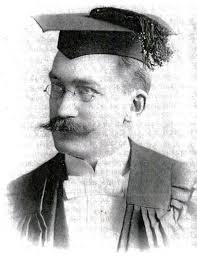
Bierring’s talents and leadership were quickly recognized. In 1916, FSMB President Charles Cook wrote Bierring to confide his belief that the latter was key to the organization’s ultimate success.

          “The future of the Federation, as I see it, is today largely in your hands…you know its past history, the pitfalls to be avoided, the problems to be solved, lines of work to be taken up, the danger of its being over-shadowed by other organizations….”  

Cook’s prophecy held true. Bierring served as the FSMB Secretary-Treasurer from 1915-1960 and as the editor of the Federation Bulletin during nearly all of that span of time.

Why was Bierring so integral to the FSMB’s success and survival? It’s simple. He served as the key player sustaining the organization at a time when it had no full-time paid staff, no permanent national offices, no specific product/service generating revenue and minimal resources derived from modest membership dues and in-kind resource assistance from the AMA. For more than 45 years the “work” of FSMB was largely sustained by this one man from his home in Iowa. Bierring carried the FSMB through its most trying times in the 1930s and early 40’s. For all intents and purposes, Bierring was the Federation during the organization’s leanest years.
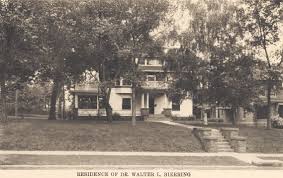
Looking back, it is easy to see that the organization might have slipped into a moribund condition and total irrelevance. Indeed, it might well have collapsed entirely without him. Knowing the FSMB today, this seems unimaginable and yet such an outcome was clearly possible, and ultimately avoided, due largely to Bierring’s contributions and steady hand over four decades.

So how did he do it? Patience, dogged persistence and force of personality. Bierring’s leadership style mirrored the attributes identified by business writers as critical to successful CEOs: humility, curiosity, a collaborative-spirit. Despite the accolades that came his way, Bierring shared credit freely with his colleagues. Over the years he wrote a series of articles highlighting the contributions of other FSMB colleagues. Bierring preferred winning over opponents through reasoned conversation and a bit of charm. As one of his contemporaries described him, Bierring was “always constructive, never destructive.” He preferred quiet diplomacy to direct confrontation—what today we call consensus-building.

When necessity arose, he could be forceful in his own way—particularly in exerting influence. One contemporary described his approach as an “iron fist in a velvet glove.”

Bierring didn’t innovate a product or service; he didn’t blaze new trails on the policy or legislative front. What he understood best was people and how to work with and through them for a desired goal—and at the right pace. For the leader of any membership organization this is a critical skillset. Operating in such a way that you are neither too far in front nor so far behind that you risk losing those you are seeking to lead.

Walter Bierring represented the longest single strand of continuity linking the organizations from its earliest days to the cusp of its resurgence in the early 1960s into the modern organization that exists today. If not for Walter Bierring, it’s unlikely the FSMB would have survived long enough to enjoy that reemergence.

Perhaps a former FSMB President said it best: “…the most fitting and lasting tributes to Dr. Bierring is the Federation itself. This is his true testimonial…he has laid the foundation and it is up to us to build and carry on.
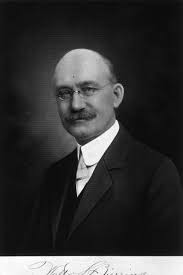
Thank you, Dr. Bierring.

The opinions expressed are those of the author and do not represent the views of the Federation of State Medical Boards.

Source:

This blog post is adapted from chapter 5 of Medical Licensing and Discipline in America: A History of the Federation of State Medical Boards (2012)

Unexpected Encounters with History

Earlier this summer my wife and I were traveling through Colorado and spent a couple nights in Trinidad. After a nice dinner at a Mexican restaurant in their downtown, we strolled the streets, window shopping and enjoying the mild weather. We ran across a placard inside one building that gave a bit of history to that site and Trinidad’s early days.

The placard related a number of “firsts” dating to 1867, including mention of Dr. Michael Beshoar as the proprietor of the “only drug store Santa Fe to Denver.”

I was taken aback when I read the name. Michael Beshoar didn’t just ring a bell. I knew precisely who he was and why I remembered that name. It turns out that one of Trinidad’s most famous early physicians had a direct connection to America’s largest medical diploma mill. As Dr. Beshoar learned firsthand, eighteen hundred miles wasn’t far enough to distance himself from a questionable decision and even more dubious connection.

Prior to seeing Beshoar identified as a prominent early citizen of Trinidad, my knowledge of him derived from familiarity with seeing his name on the printed list of faculty for John Buchanan’s medical college in the mid-1870s. I learned a bit more about Beshoar when I discovered the Denver Public Library contained archival materials including his “papers.” From these I learned that Beshoar’s connection with the infamous diploma mill dated to 1873.

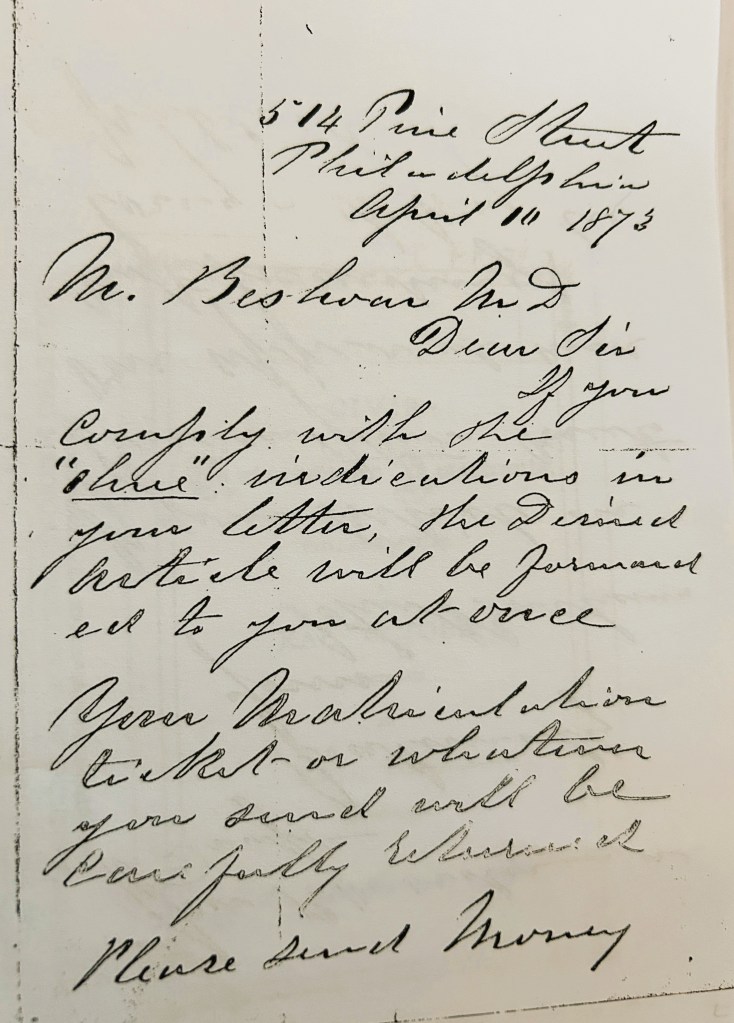
On April 10 of that year, John Buchanan responded to an inquiry from Beshoar stating:

“Dear Sir, if you comply with the [?] directions in your letter,  the desired article will be forwarded to you at once. Your  matriculation ticket or whatever you send will be carefully [?]. Please send money for P.O. order or draft.”

The indirect language and euphemism (“desired article”) were common features of John Buchanan’s operative style when dealing with prospective customers by mail. The context for this letter and later exchanges between the two men make it clear that Beshoar had expressed interest in purchasing a diploma from one of Buchanan’s legally chartered schools: the Eclectic Medical College (EMC) or the American University of Philadelphia.

Another letter from 1879 included an interesting pledge from Buchanan. He assured Beshoar that, “we shall take care of your interests if there is any inquiries.” Whether this was specific to securing students for his fall 1879 classes at the EMC or if this alluded to the press inquiries growing more frequent concerning the nature of Buchanan’s operations is unclear. One suspects that Buchanan stood behind both.

When I finished my book on the subject (Diploma Mill), my view of Dr. Michael Beshoar was uncomplicated. He was simply one of the rogues unmasked by the Philadelphia Record’s crusading editor, John Norris after authorities’ arrest and search of Buchanan’s offices at 514 Pine Street. But that placard in Trinidad gave me pause. What did I really know about Dr. Beshoar? Was he just another of Buchanan’s scoundrels? Or was there more to his story?

I decided to look more closely. As you’ll see, the picture becomes more nuanced and less clear. (Note: The same is true for another EMC “graduate” that I wrote about in 2019)

Michael Beshoar was born in 1833 and later graduated from the University of Michigan’s medical college in 1853. Beshoar relocated to Arkansas where he established deep roots: he married, established a medical practice and served in the state legislature. When the Civil War broke out, he served as a medical officer for the Confederacy. Captured in 1863, he began treating Union troops and ultimately served the U.S. Army at Fort Kearney in Nebraska Territory.

A flamboyant frontier persona

By 1867, he drifted into Colorado, first Pueblo and then Trinidad. In the latter town, his wide interests and boundless energy saw him practicing medicine, operating a drug store, creating his own patent medicines; and later opening a newspaper, engaging in land speculation, serving on a vigilance committee, pursuing local and state political offices and much more. Dr. Michael Beshoar’s boundless energy and entrepreneurial interests touched just about everything and everyone in the Trinidad region.

All of which begs the question: Why did Michael Beshoar get mixed up with America’s most notorious medical diploma mill? 

To understand this, we need to go back to Beshoar’s days in Arkansas. Like so many Southerners, the Civil War ruined him financially. In an 1879 letter, he claimed to have come out of the war with “$1.20 suit of summer clothes” and little else. Thousands of acres that he had procured earlier in northern Arkansas were lost to back taxes. His dreams (“I was sure to being a millionaire in a few years”) were dashed.

Still, ambition never seemed to wane in Beshoar. While he studied and practiced medicine, Beshoar appeared to see himself as much more than just a physician. Ambition is the key to understanding Dr. Michael Beshoar and ultimately his interactions with Dr. John Buchanan.

Let’s go back to that 1873 correspondence with John Buchanan. At that time, medicine was effectively an unregulated field in this country. Only North Carolina and Texas had laws in place controlling medical practice. Even then I doubt whether much, if any, enforcement of these laws took place.

Most Americans’ experience of health care involved what we would categorize today as folk medicine, i.e., botanical remedies delivered in the home by family, friend or a trusted neighbor. The “doctor” called in to render aid was more often a local healer whose skills (real or perceived) were valued in their own right. Probably only a minority of Americans received treatment at the hands of a doctor as defined by someone possessing a medical degree or diploma.

Recall that Beshoar received a medical diploma from Michigan. So why would he have been seeking one of Buchanan’s diplomas? Initially, I thought the likely explanation was simply that Beshoar no longer had the sheepskin credential in his possession after his many moves. That turned out not to be the case as newspapers covered Beshoar’s attendance at a 1903 reunion in Ann Arbor where he produced the original diploma and seal issued to him half a century earlier.

So if it wasn’t a case of replacing a lost diploma, why would have wanted one from Buchanan? The answer may be as simple as this: While a medical degree wasn’t necessary to practice in Colorado, it was a great distinguisher that could only enhance Beshoar’s standing in the community. So, if he was going to have a diploma, it couldn’t hurt to have a degree from a school in Philadelphia, the unchallenged epicenter of American medicine. Beshoar’s would have been an ad eundem degree, i.e. one conferred in addition to an earlier degree. This is entirely speculative on my part but wholly plausible. This was a fairly common practice among 19th century colleges and universities.

Beshoar and Buchanan engaged in periodic correspondence in the 1870s. In his February 1875 letter to Beshoar, Buchanan wrote, “Your letter and proposition accepted….” Beshoar had apparently requested appointment to the EMC faculty and though the appointment ultimately was just titular (Beshoar’s name on the faculty list), their correspondence makes clear that Buchanan actually expected Beshoar to join him in Philadelphia to teach the fall 1875 session. Their correspondence continued into 1878 with Buchanan still hoping for Beshoar’s presence on-site and asking for a photograph so that all faculty could be represented in their advertising.

Ultimately, Beshoar did receive a Buchanan diploma and had his name on the faculty list presented in the EMC’s journal and the school prospectus. While these items might have been showcased in Beshoar’s office, they later proved problematic for him.

In the summer of 1880, John Buchanan was arrested and his offices searched. His subsequent faked suicide and flight from justice made front page news across the country. The Philadelphia Record and other newspapers printed various materials captured in the police raid, including exhaustive lists of the many recipients of Buchanan diplomas. Nestled among the the names: Michael Beshoar of Trinidad, Colorado

In an undated letter, the president of the Colorado State Medical Society demanded that Beshoar appear to answer multiple charges including questionable advertising, misrepresentations about his relationship to the ‘Rocky Mountain Medical Association’ and his status as “Emeritus Professor of the Practice of Medicine in the American University of Philadelphia—a notorious mill concern.”

Since the Colorado State Board of Medical Examiners wasn’t established until 1881 there were no licensing repercussions for Beshoar. And at the end of the day, membership in the state medical society wasn’t necessary to practice medicine.

So where did this leave Beshoar? Perhaps slightly embarrassed and the subject of snide comments from locals who heard the rumors coming from Beshoar’s medical brethren but probably not much more.

His interactions with Buchanan and his dubious medical colleges carried little risk for most of the 1870s. Beshoar sought a credential and a little gravitas through a titular faculty appointment that he likely saw as just a means to an end—bolstering his reputation and his medical practice in the community. These were precisely the moves of an energetic entrepreneur. Unfortunately for him, changing times brought legislation regulating the practice of medicine to every state and territory. The go-get’em spirit that rewarded bold, opportunistic types like Dr. Michael Beshoar looked a lot different by 1880 when the full nature of Buchanan’s diploma mill became known. Beshoar’s wide interests and influence in southern Colorado’s medical, political and newspaper communities made a fair number of rivals and outright enemies. His connection to Buchanan and the EMC provided easier fodder for critics looking to smear Beshoar’s reputation.

I have yet to run into anything in the historical record for Beshoar that suggests this blemish on his career made any lasting impression. While his grandson’s book, Hippocrates in a Red Vest, addressed the issue directly, his review of the evidence strongly suggests the links to Buchanan were a minor irritant in an otherwise remarkably diverse and successful career. Most of the sources and stories characterize him as a bit of free-spirited pioneer. Fair enough. Sleep well, Dr. Beshoar.

Dr. Beshoar in center right light colored top hat. Standing before one of the newspapers he founded.

The opinions expressed are those of the author and do not represent the views of the Federation of State Medical Boards.

Sources:

Michael Beshoar Papers, Box 7, Folder FF19

Barron Beshoar, Hippocrates in a Red Vest

Carl Bartecchi, “Practicing Medicine in the Wild West.” Access August 22, 2025 at https://www.michiganmedicine.org/medicine-michigan/practicing-medicine-wild-west

Nancy Kristofferson, “Michael Beshoar: Doctor and Developer,” World Journal. Huerfano, Colorado. November 20, 1914. Accessed August 22, 2025 at https://worldjournalnewspaper.com/michael-beshoar-doctor-and-developer/