It started in North Carolina. In its 1858-59 legislative session, that state established the first state medical board in the era that historians now recognize as the dawn of modern medical regulation. A primary duty of the newly created North Carolina Medical Board required them to “examine” all applicants for a license to practice medicine. As states enacted medical licensing laws in the post-Civil War era, legislatures routinely codified this power into statute.
Over the next century, sitting for a medical licensing examination became a common rite of passage for all newly minted physicians. The rite continues to this day. However, only a small percentage of physicians practicing in 2019 were licensed based upon one of these state-developed exams as they were wholly replaced by nationally administered assessments by the mid-1970s.
So essential was examining prospective licensees to the core functioning of state medical boards that most of these boards’ original title incorporated some variation on “medical examiner,” e.g., the Texas Board of Medical Examiners or Nebraska Board of Medical Examiners. (Pick any state, insert that name into the title and that was pretty much it) And yet these boards willingly (eagerly?) surrendered this role. Why were state medical boards willing to surrender this long-standing assessment role? It wouldn’t seem to have been an easy decision considering how fundamental this role was to the identity and purpose of medical licensing boards.
Several critical factors appear to have been at work. First, the science of assessment and testing had progressed significantly by the early 1960s. Few, if any, medical boards employed the technical staff and resources necessary to incorporate the professional standards set forth in the Standards for Educational and Psychological Testing [1966, 1st edition] or its precursor publications.1
Many boards had already tacitly acknowledged this deficiency through their arrangements with the National Board of Medical Examiners (NBME) to utilize content drawn from that organization’s Parts examination. By the mid-1960s thousands of physicians were taking state exams that contained items from the NBME item bank. Developing a high-quality exam was onerous. If actions speak louder than words, a significant portion of state medical boards were already signaling their willingness to exit the exam business.2

Veteran medical regulators like Robert Derbyshire acknowledged the problems with state board exams. Writing in the Federation Bulletin, Derbyshire pointed to the disparate passing standards being applied by boards on their examinations. In some states, few (if any) candidates failed the exam over a multi-year period—raising legitimate questions about both the content and passing standard utilized in these exams.3
Another factor largely forgotten today stems from a mid-1960s federal document: The Report on the President’s Advisory Committee on Health Manpower. This report cast a spotlight on the huge disparity in international medical graduates’ (IMGs) performance on state medical licensing exam—in some states no IMGs failed; in others, nearly 70% failed the exam. The report’s recommendation called for a common standard on licensing examination and suggested the NBME Parts as the tool all examinees, including IMGs.2
However, this recommendation proved problematic in looking to the NBME Parts as a solution. NBME’s three-Part certifying examination was designed to mirror the U.S. medical education curriculum with its heavy pre-clinical emphasis on foundational medical sciences. This content emphasis represented a significant potential hurdle for IMGs. Whether solely because of this or in conjunction with other reasons, the NBME Parts was not open to IMGs in the 1960s. Indeed, the exam had been limited to US graduates for decades.
Wary of the potential for federal remedies arising from the President’s Health Manpower report and cognizant of the deficiencies of state-developed exams, the Federation of State Medical Boards (FSMB) took this as an opportune time to move state medical boards toward a common examination. Through its Examination Institute, the FSMB had long sought to bring greater quality and consistency to the content of state medical boards’ examination. This effort, while laudable, brought at best mixed results reflective of the swimming upstream challenge it represented to an organization of modest means and resources.
Instead, the Federation approached the NBME about a new examination. Together the two organizations developed the Federation Licensing Examination (FLEX)—an examination open to all physician candidates for licensure. The FLEX drew upon the extensive item pool and test development expertise at the NBME to create a three-day examination that sampled a physician’s basic and clinical science knowledge (Day 1 and 2 respectively) with critical assessment on the third day of clinical competence—a focus on the application of knowledge in a clinical context…or what long-time state board members described as “fitness to practice.”4 The FLEX also used a content-weighting that gave greater priority to clinical medicine. This 3-2-1 formula placed greater emphasis on clinical competence (3) with lesser on clinical science (2) and the least emphasis on basic medical sciences (1).5 Utilizing this weighting alleviated the concerns regarding the appropriateness of the exam for IMGs.
The first administrations of FLEX occurred in June and December 1968 with eight states participating: Illinois, Maine, Nebraska, New Mexico, Ohio, Oregon, West Virginia, Wyoming.5 This modest but promising beginning led the Federation to begin heavily promoting adoption of the FLEX in its Federation Bulletin and through exhibits at its annual gathering held in conjunction with the yearly meeting of the American Medical Association.


(Top left: Dr. Fred Merchant at the FLEX display during June 1970 AMA meeting. Top Right: Typewritten text of Merchant’s June 15, 1970 editorial in JAMA; original mock-up created by Merchant for the display)
The timing of FLEX’ introduction seems to have been fortuitous. Despite a century of medical boards “examining” prospective licensees, these boards rapidly abandoned their state exams to adopt the FLEX. By 1970, twenty-five states used FLEX; two years later the total rose to forty-two states.6 By 1973, every state except Florida and Texas were on board (these two joined before the end of the decade).
The careful reader may have deduced that the introduction of FLEX failed to resolve a lingering issue—the existence of two examination pathways to licensure (FLEX and Parts) with only one of these closed to IMGs. One of my next blog posts will pick up this thread of the story leading to the United States Medical Licensing Examination (USMLE).
The views expressed are those of the author and do not reflect those of the Federation of State Medical Boards.
1 Technical Recommendations for Psychological and Diagnostic Techniques (1954) by American Psychological Association or Technical Recommendations for Achievement Tests (1955) published by National Education Association.
2 John Hubbard, “The Federation Licensing Examination and the Testing of Clinical Competence,” Federation Bulletin (May 1968): 153.
3 Robert Derbyshire, “How to Obtain a License—In One Easy Lesson,” Federation Bulletin (April 1965): 124-27
3 John Hubbard, “The Federation Licensing Examination and the Testing of Clinical Competence,” Federation Bulletin (May 1968): 153.
4 Frederick Merchant, “A Federation Licensing Examination: Testing for Fitness to Produce,” Federation Bulletin (April 1968): 119.
5 Frederick Merchant, “The Federation Licensing Examination (FLEX)—A Special Report,” Federation Bulletin (January 1969): 6
6 “Dates FLEX First Used,” Federation Bulletin (June 1974): 210
 My professional activities bring me into regular contact with current and former members of state medical boards throughout the United States. One of the conversational threads that often arises involves reappointment to the board. Often, I’ve heard phrases like, “I’ve termed out but the governor hasn’t appointed anyone yet to take my place” or “We have a Republican governor now and I was appointed by a Democrat so I’ll have to wait and see if I’m reappointed.”
 Even one who enjoyed such extreme longevity on his medical board (Robert Derbyshire) acknowledged the trade off this entailed. Yes, the veteran of 20 years on the medical boards may have become expert in disciplinary hearings but, Derby wondered, at what cost in terms of other/new ideas?
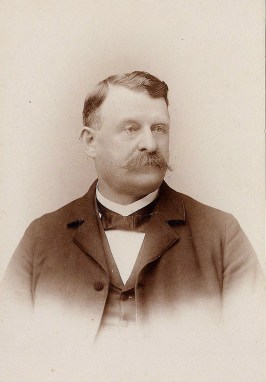 He opened a pharmacy in 1875 in Mansfield, Massachusetts and appears to have combined a medical/pharmacy practice. Massachusetts proved rather late in adopting medical legislation. It wasn’t until 1894 that Dr. Wilson had to apply for a medical license with the Massachusetts Board of Medical Registration.

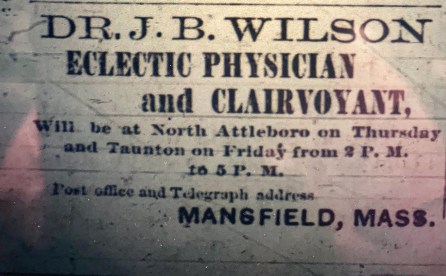 He was apparently a prudent business man too. Eventually, he dropped the clairvoyant from his ads as the early enthusiasm for medical hypnosis waned. Later, he dropped eclectic from his physician title as ‘regular’ medicine began to absorb the homeopaths and eclectics who once saw themselves as practitioners offering patients an alternative to conventional medical practice.



 But for all the supposed familiarity with the report by those who love to reference it, one portion has been largely forgotten and seldom cited—chapter 11 dealing with state medical boards. I re-read this chapter recently. What struck me most in revisiting the text was Flexner’s juxtaposition of praise and criticism of state medical boards. I found myself momentarily flashing back to my 10th grade English class, Julius Caesar and Marc Anthony’s funeral oration: “I come not to praise Caesar but to bury him.”
 Flexner identified three weapons at the disposal of state medical boards—all of which derived from their statutory authority bestowing varying degrees of oversight/influence on education within their state. These powers included…
 Recently, I re-read her commentary; several things stood out to me. One was the strong sense that a woman running for elective office in the 1980s—even within a national association rather than political office—was not a matter to be taken lightly as missteps by a candidate served as potential fodder for the larger narrative of critics. Thus, in mulling over whether to run for the office, Behrens consulted two influential women in medicine at that time: Dr. Edithe Levit, President of the National Board of Medical Examiners and Dr. Nancy Dickey, member of the AMA board of trustees. Their advice boiled down to what you see as the title for this piece.
 The 1985 FSMB Handbook listed 66 state medical boards with a total of 602 individuals serving throughout the country; only 99 (16%) were women. In fact, most of the women serving on state medical boards were non-physicians in public member or ancillary health profession roles. Dr. Behrens was one of only 40 female physicians serving on medical boards in 1985—6.6% of the total state board membership.



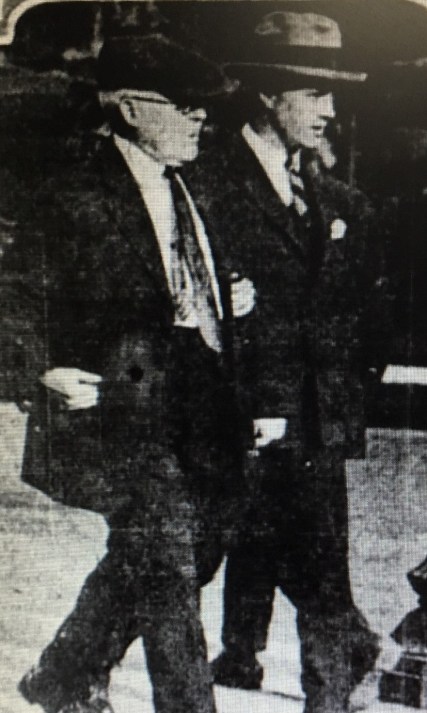

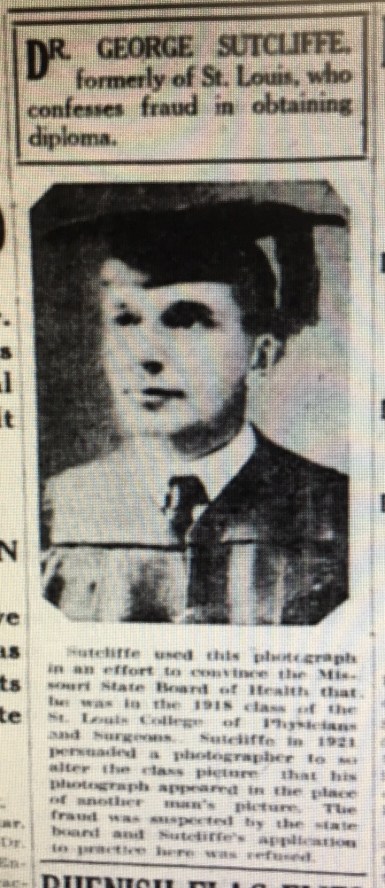

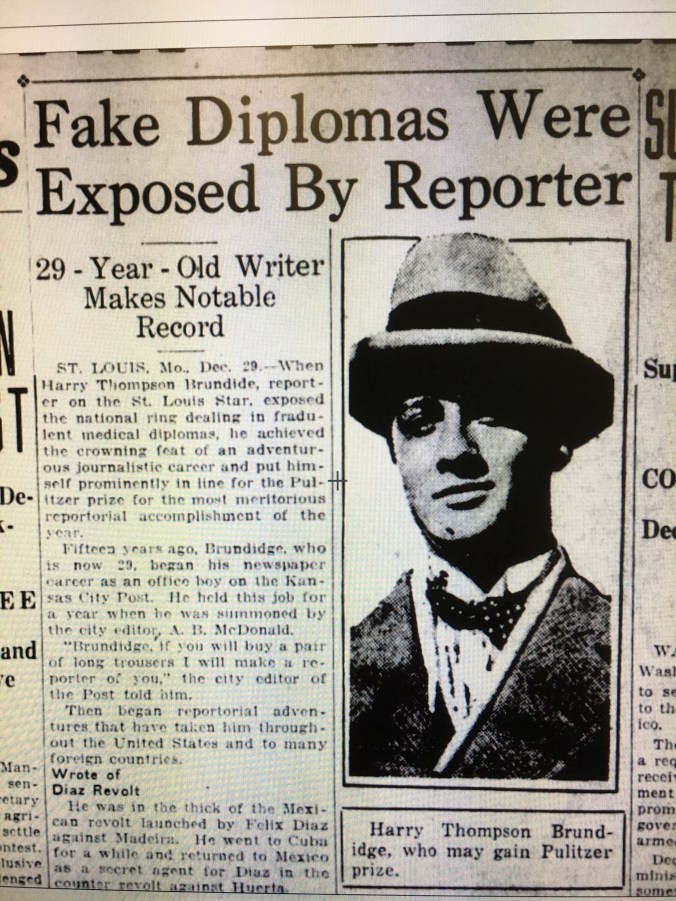

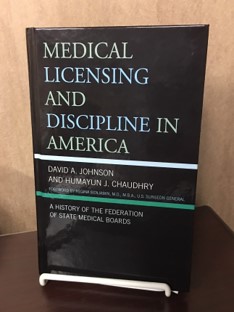
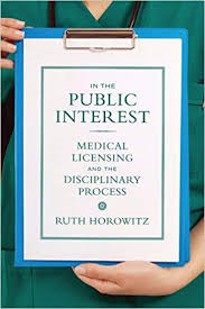 Take a professionally trained sociologist (Ruth Horowitz), place her as a public member on not one but two medical boards over the course of her career and you get this fantastic offering—In the Public Interest: Medical Licensing and the Disciplinary Process. This book should be shared with every new member to a state medical board—especially the public members. Her analysis is spot on and her recommendations apt.
 I don’t want to oversell the shift tin discipline and mindset that occurred. Our system isn’t perfect (see
  The armchair historian